
Twitter Marketing for Startups: A Beginner's Guide
Twitter marketing for startups works when you stop chasing virality and use X as a daily distribution channel for insight, conversations, and trust. The beginner playbook is simple: pick a clear audience, post useful ideas consistently, reply like a human, and measure which topics turn attention into clicks, signups, and demos.
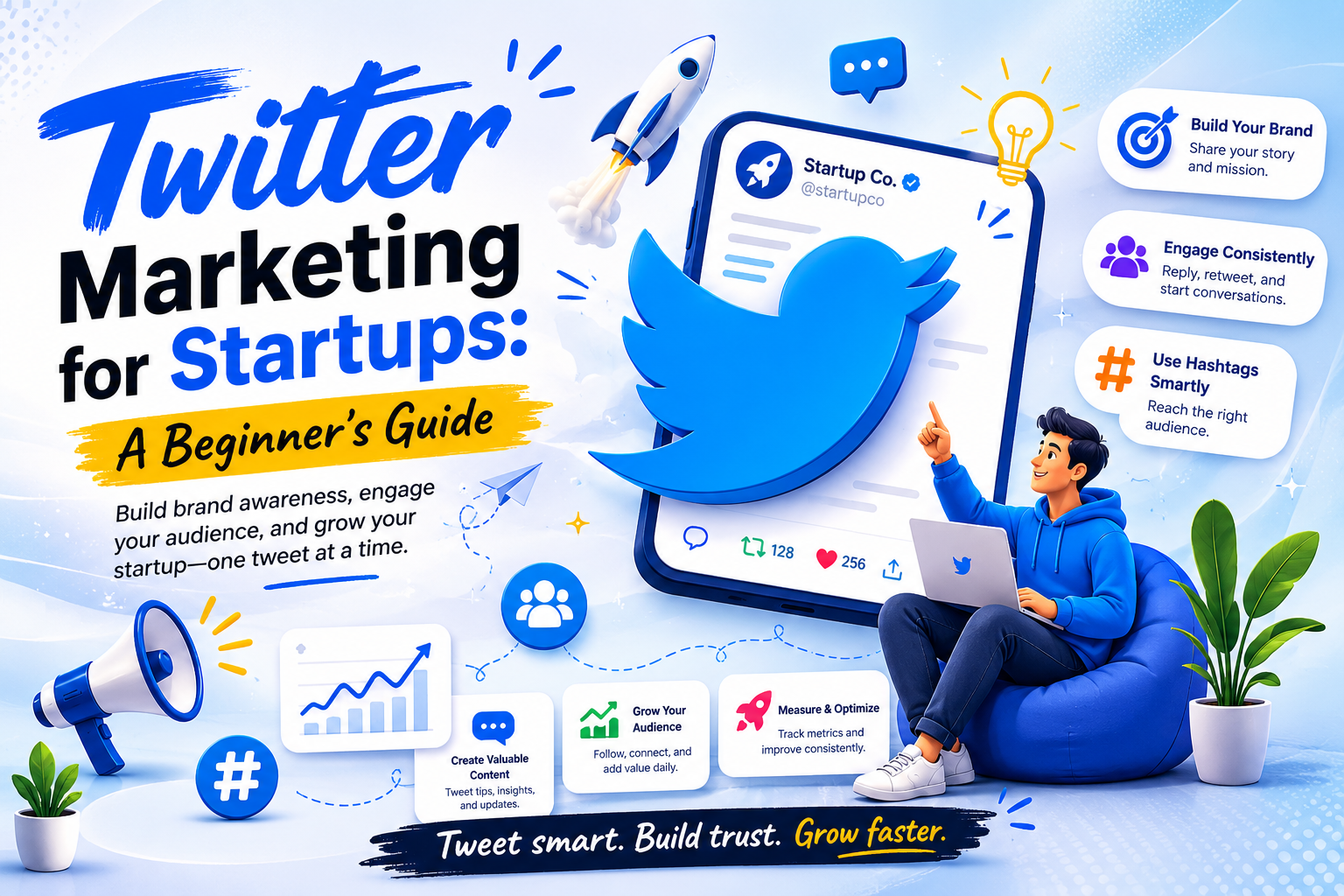
Twitter marketing for startups works when you stop chasing virality and use X as a daily distribution channel for insight, conversations, and trust. If you are just getting started, the winning approach is usually boring in the best way: define who you want to reach, publish useful posts on a consistent schedule, reply to the right people, and track what turns attention into real business outcomes.
Most founders fail on X for one of three reasons. They post vague advice no one remembers, they disappear for a week after three posts, or they treat Twitter like a broadcast channel instead of a conversation. You do not need a big following to get value from the platform, but you do need a clear system.
What Twitter marketing means for a startup
For a startup, Twitter marketing is the practice of using X to attract the right audience, build credibility in public, and create opportunities for traffic, partnerships, hires, and revenue. It is not only about follower count. A founder with 2,000 relevant followers and strong replies can outperform an account with 50,000 passive followers.
The platform is especially useful for SaaS founders and indie makers because it rewards clear thinking, speed, and consistency more than polished brand campaigns. You can test positioning, share product progress, learn customer language, and meet people already talking about the problems you solve.
Start with positioning, not posting
Before you write a single tweet, answer three questions:
Who exactly are you trying to reach?
What problem do they already know they have?
Why should they listen to you on this topic?
If your startup helps B2B founders automate support, your audience is not "everyone building a company." It might be support leads at SaaS companies with 5 to 50 employees, plus founders still handling support themselves. That level of specificity changes what you post.
A simple positioning line helps: I share practical lessons on [problem] for [audience] based on [experience]. That becomes your filter for what belongs on your timeline.
Examples of focused content angles
A bootstrapper building in public: pricing experiments, churn lessons, mistakes, customer interviews
A technical founder: architecture trade-offs, product decisions, developer workflow, shipping speed
A go-to-market founder: outbound lessons, onboarding fixes, positioning changes, demo call patterns
Beginners usually improve faster by choosing two or three repeatable angles instead of trying to sound smart about everything.
Set up the profile so visitors understand you in 10 seconds
Your profile does a lot of the conversion work after someone sees a post. Keep it simple and specific.
Your name and photo should feel real and recognizable
Your bio should say who you help and what you are building
Your header can reinforce the product or audience
Your pinned post should explain the problem, the product, or your best thinking
Your link should send people to one clear destination, usually your homepage or signup page
If someone lands on your profile after reading one strong reply, they should immediately understand what you do and whether they should follow.
The beginner content strategy that actually works
You do not need a giant content calendar. You need a publishing rhythm you can sustain for months.
A good starting mix for a startup founder is:
1 insight post: one sharp lesson about your market, product, or customer behavior
1 proof post: a screenshot, result, experiment, or before-and-after story
1 opinion post: a clear stance on a common mistake or trade-off
1 conversation post: a question that attracts useful replies from your target audience
That can mean four solid posts a week, or one post on most weekdays. More volume can help, but only if quality stays intact.
Formats that are beginner-friendly
Short text posts with one idea and one takeaway
Mini threads that break a process into steps
Product screenshots with context about what changed and why
Customer language posts built from real objections or questions
Contrarian but factual takes on common startup advice
Strong posts are usually specific enough to teach something and short enough to skim. "Talk to users" is weak. "Five demo calls showed us that buyers cared less about AI and more about faster handoff to humans" is stronger.
Use replies as your growth engine
This is the part beginners underestimate. Replies are often the fastest way to get early reach because they put you in front of people who already have the audience you want.
Instead of leaving generic comments like "great point," add something that moves the conversation forward:
A concrete example from your own experience
A respectful disagreement with a clear reason
A useful framework or checklist
A short story that proves the original point
If you are starting from zero, spending 20 to 30 minutes a day on thoughtful replies can matter more than writing one extra standalone tweet. You are borrowing context instead of fighting for attention from scratch.
What a good reply looks like
Bad reply: Totally agree. Consistency is everything.
Better reply: My mistake was treating consistency as volume. What actually helped was picking 3 repeatable themes so I was not inventing a new voice every day.
The second version sounds like a person with scar tissue, not a content bot.
How to turn ideas into posts every week
The easiest way to stay consistent is to collect raw material from work you are already doing. Founders usually have more content than they think.
Good source material includes:
Sales calls and demo objections
Support tickets and onboarding confusion
Product decisions and feature cuts
Metrics changes and experiments
Founder mistakes you would not repeat
Industry takes you disagree with
When you notice a repeated question, that is often a post. When a customer says something unusually clear, that is often a post. When a launch underperforms and you learn why, that is definitely a post.
I like this simple drafting template:
State the problem or observation
Explain what happened
Share the lesson or action
Example: We thought founders wanted more automation. On calls, they kept asking for more control and review. The lesson: in early-stage SaaS, trust often matters more than maximum automation.
Metrics that matter more than impressions
Impressions are useful, but they are not enough. A startup should care about whether content attracts the right people and creates the next step in the relationship.
Track metrics like:
Profile visits per post
Follows from relevant accounts
Link clicks
Replies from potential customers or peers
Newsletter signups, demos, or trials tied to posts
Which topics produce the best downstream conversations
A post with 1,200 impressions that sends two qualified demo requests is more valuable than a post with 40,000 impressions and zero buyer intent.
Common beginner mistakes on Twitter
Posting broad motivational advice instead of specific experience
Talking only about your product and never about the problem space
Ignoring replies after posting
Changing tone and topic every few days
Chasing trends that have nothing to do with your audience
Measuring success by follower count alone
The fix is usually the same: narrow the audience, raise the specificity, and stay in the conversation longer.
A simple 30-day Twitter marketing plan for startups
Week 1
Tighten your bio, pinned post, and profile link
Pick 3 content themes tied to your product and audience
Write 10 post ideas from recent work, customer calls, and mistakes
Week 2
Publish 4 to 5 posts
Reply to 3 to 5 relevant accounts each day
Note which posts drive profile visits and quality replies
Week 3
Double down on the best-performing topic or format
Turn one strong post into a short thread or follow-up angle
Test one conversation-starting question for your audience
Week 4
Review results by topic, not only by impressions
Keep what earned relevant attention
Drop what felt clever but did not create useful response
If you want help staying consistent without turning your account into generic AI sludge, tools like Postvoy can help founders systemize posts, replies, and warm outreach while keeping strategy and voice under their control. The important part is not automation by itself. It is preserving specificity and judgment at scale.
Final takeaway
Twitter marketing for startups is not complicated, but it is easy to do poorly. The beginner advantage is that you can still sound close to the work: the calls you took, the feature you shipped, the mistake you made, the pattern you noticed.
That is what earns attention on X. Not perfect branding. Not forced virality. Clear thinking, shown consistently, in public.
LET POSTVOY RUN THIS FOR YOU
Finding the right conversations and drafting replies that sound like you is an hour you don’t have. Postvoy surfaces the threads, drafts the replies in your voice, and waits for your approval.
Try it free for 3 daysFrequently asked questions
- How often should a startup post on Twitter?
- A good starting point is 4 to 5 quality posts per week plus daily replies to relevant accounts. The goal is consistency you can maintain, not random bursts of activity.
- Is Twitter marketing worth it for early-stage startups?
- Yes, if your buyers, peers, or industry voices already spend time on X. It is one of the fastest channels for testing messaging, building trust, and starting conversations without a big budget.
- Should I use a founder account or a company account?
- Most early-stage startups get better results from the founder account because people engage with people more readily than with brand logos. The company account can support, but the founder voice usually leads.
- What should I post if I have not launched yet?
- Post what you are learning while building: customer interviews, product decisions, failed assumptions, and small wins. Specific learning beats polished hype, especially before launch.